Who Is Raymond Taylor and Why His Story Matters
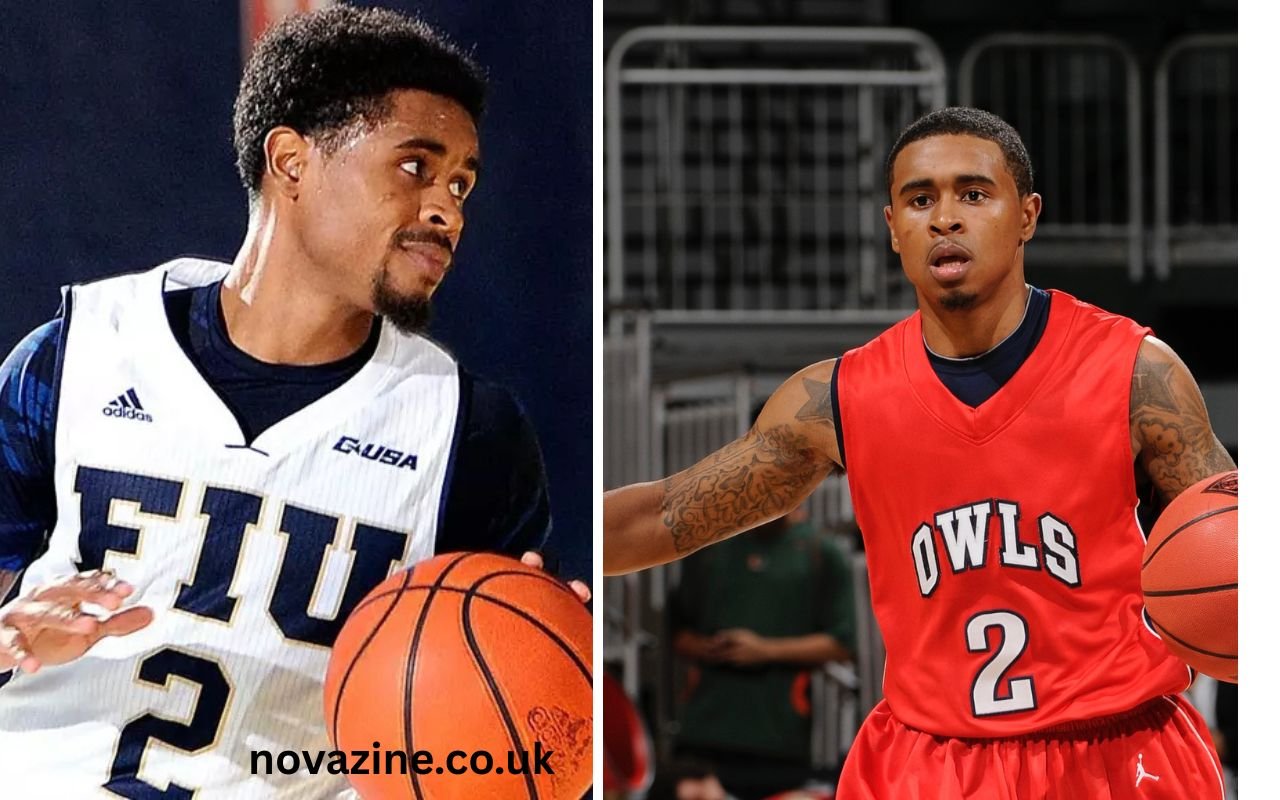
Raymond Taylor is a former college basketball player whose name remains etched in the record books of Florida Atlantic University. Born on October 27, 1990 in Miami, Florida, Taylor grew up in a city known for producing elite basketball talent, yet his path to success was anything but conventional . Standing at just five feet six inches tall, he was routinely overlooked by recruiters who favored taller, more physically imposing players. However, those who watched him play at American Heritage School in Plantation, Florida recognized something special, a point guard with exceptional court vision, lightning quickness, and a competitive fire that could not be measured in inches or pounds. Taylor’s journey from overlooked prospect to FAU record holder is a testament to the power of determination and self belief.
Taylor’s story matters not only because of his basketball achievements but also because of his willingness to share the complete picture of his college experience, including its triumphs and its failures. He has spoken openly about being kicked off the FAU team following a conflict with his head coach, an admission of imperfection that makes his narrative more human and more relatable . Unlike athletes who present carefully curated versions of their lives, Taylor has chosen vulnerability over pretense, acknowledging that he made mistakes, that he paid for those mistakes, and that those difficult experiences helped shape him into the man he is today. This honesty has endeared him to fans who appreciate authenticity in an era of carefully managed public images.
The name Raymond Taylor belongs to several other notable individuals across different fields, including a pioneering radiologist, a World War Two veteran, and a successful lawyer and Mensa member. However, for fans of Florida Atlantic University basketball and followers of the Sun Belt Conference, the Raymond Taylor who wore the Owls jersey remains the most recognizable . His legacy at FAU is secure, with his name still appearing near the top of multiple career and single season statistical leaderboards. Years after his final game, Taylor continues to be celebrated by those who watched him thread no look passes through tight defenses and orchestrate FAU’s offense with the skill of a maestro leading an orchestra.
The Early Life and High School Career of Raymond Taylor
Raymond Taylor grew up in the basketball hotbed of Miami, Florida, where competition on the courts is fierce and only the most talented and determined players earn recognition. The South Florida basketball scene has produced countless Division I athletes and NBA stars, creating an environment where young players must constantly prove themselves against elite competition. Taylor was never the biggest or the strongest player on the court, but he quickly learned that basketball is a game of skill and intelligence as much as physicality. His quickness, his ball handling, and his ability to see plays develop before they happened set him apart from other guards his age. By the time he reached high school, he had already developed the court vision that would later make him a record setting college point guard.
Taylor attended American Heritage School in Plantation, Florida, an institution known for its strong athletic programs and academic excellence. Playing for the Patriots, he began to attract attention from college recruiters despite his modest height. Listed at five feet six inches and approximately one hundred forty five pounds, Taylor was easy for scouts to overlook at first glance . However, those who actually watched him play saw a player who consistently out performed taller, stronger opponents through superior basketball IQ, lightning quickness, and an unrelenting competitive spirit. He led his team to victories against highly ranked opponents and established himself as one of the premier point guards in the region. College offers began to arrive, and Taylor ultimately chose to stay close to home by committing to Florida Atlantic University.
Taylor graduated from American Heritage in 2009 and prepared to take the next step in his basketball journey. The transition from high school to college basketball is challenging for any player, but for an undersized guard, the degree of difficulty is even higher. Taylor would now face defenses filled with players who were bigger, faster, and more experienced than anyone he had faced before. However, he arrived at FAU with confidence in his abilities and a willingness to adapt his game to the college level. The coaching staff recognized his talent immediately and gave him significant playing time as a freshman. Taylor was determined to prove that height is not a measure of heart, and he would spend the next several seasons demonstrating exactly that to everyone who doubted him.
Raymond Taylor’s Record-Setting Career at Florida Atlantic University
Raymond Taylor’s career at Florida Atlantic University was defined by excellence as a playmaker and floor general. Over his four seasons with the Owls, he established himself as one of the most prolific passers in program history, leaving a statistical legacy that has endured for years after his departure. When his college career concluded, Taylor ranked third all time at FAU in career assists with four hundred twenty five . Only two other players in the history of the program had distributed more baskets to their teammates, a remarkable achievement for a player who was often the smallest person on the court. Taylor also ranked seventh all time in steals with one hundred twenty eight, demonstrating that his impact was felt on the defensive end as well as offensively.
The 2009 to 2010 season represented the pinnacle of Taylor’s individual achievement. During that campaign, he set the FAU single season record for assists with one hundred seventy seven, a mark that still stands as the best in program history . This record speaks not only to Taylor’s passing ability but also to his durability and consistency. To accumulate that many assists in a single season, a point guard must be on the court for nearly every game and must create scoring opportunities for teammates on a consistent basis. Taylor’s performance that season earned him recognition as one of the premier point guards in the Sun Belt Conference. His ability to find open teammates in transition, in the half court, and off screens made the FAU offense difficult to defend. Fans who watched Taylor play during that magical season still speak of his no look passes and his remarkable ability to thread the needle through tight defensive windows.
Taylor also delivered several unforgettable single game performances that highlighted his elite playmaking abilities. During the 2009 to 2010 season against South Alabama, he dished out thirteen assists, the second highest single game total in FAU history . The following season, against Warner University, he recorded twelve assists, tying for the third highest single game total in program history . These performances were not statistical anomalies but reflections of Taylor’s consistent ability to control games as a floor general. He was the kind of point guard who made the right basketball play almost every possession, whether that meant scoring, passing, or simply keeping the offense in rhythm. While his scoring numbers were modest, his impact on winning was immense. Teammates loved playing with him because they knew that if they got open, the ball would find them, often arriving exactly when and where they needed it.
The Challenges and Controversies of Taylor’s College Years
While Raymond Taylor’s basketball achievements at FAU are impressive and well documented, his college journey was not without significant challenges and painful setbacks. Taylor has been refreshingly honest about the difficulties he faced during his time with the Owls, refusing to present a sanitized version of his past. In a reflective interview conducted years after his playing days ended, he spoke about the dramatic contrast between the highs of his early college career, when his face appeared on billboards and buses promoting FAU basketball, and the lows that followed . He admitted to being “full of himself” as a young player enjoying the attention and notoriety that came with being a star athlete. This attention, combined with the new found freedom of college life, led to mistakes that would ultimately cost him dearly. Taylor has openly acknowledged failing a drug test, an offense that led to his suspension from the team and forced him to sit out multiple games while watching from the sidelines.
Perhaps the most significant controversy of Taylor’s college career involved his deteriorating relationship with head coach Mike Jarvis. Taylor has stated plainly that he went from being Jarvis’ favorite player to the reason he left the program . While the specific details of their falling out remain private, Taylor has implied that serious conflict with the coaching staff led directly to his departure from the team. He described refusing to let Jarvis “control anything any more,” language that suggests tensions had reached a breaking point from which there was no return . The situation became so strained that Taylor ended up sitting on the bench during the conference tournament and was not permitted to fly back with the team afterward. Instead, he purchased his own plane ticket home, a lonely and symbolic end to his time as a member of the FAU basketball program. This was not the conclusion anyone had envisioned for his college career.
Despite these difficult episodes, Taylor has chosen to view his college experiences, both the triumphs and the failures, as essential and valuable parts of his personal development. He described his time at FAU as the period when he transitioned “from being a boy and turning into a man” . The mistakes he made, the discipline he faced from the university, and the conflicts he endured all contributed to his maturation as a human being. He has not made excuses for his behavior but has instead used his story as a cautionary tale and as a testament to the importance of learning from failure. This willingness to be vulnerable and honest about his past has made Taylor a more respected and relatable figure than if he had only discussed his on court achievements. His journey demonstrates powerfully that athletic talent alone is insufficient for lasting success, and that character, discipline, and the ability to learn from mistakes are equally essential qualities.
Life After Basketball and the Transition to Music
After his basketball playing days ended, Raymond Taylor faced the same fundamental question that confronts countless former college athletes: what comes next when the game is over? For Taylor, the answer involved a return to one of his earliest passions, music, which had been a constant companion throughout his life. Growing up in Miami, Taylor had always been interested in musical expression, and he decided to pursue this interest more seriously after leaving competitive basketball behind. He adopted the stage name Ray Almighty and began releasing original music, including songs titled “Flexx” and “Rackz” . His musical style draws directly from his South Florida roots and from his life experiences, including the triumphs and the struggles he faced during his basketball career. While he has not achieved mainstream commercial success, Taylor continues to develop his craft and to build a dedicated following of fans who appreciate his authenticity.
Taylor’s transition from the basketball court to the recording studio was not without significant challenges. The music entertainment industry is notoriously difficult to break into, and establishing credibility as a new artist requires extraordinary persistence, extensive networking, and a willingness to perform wherever opportunities arise, whether that means large venues or small clubs. Taylor has approached his music career with the same determination and work ethic he showed on the basketball court, refusing to give up when faced with obstacles. He remains active on social media, particularly Instagram, where he connects directly with fans and promotes his musical projects. His Instagram account features a mix of personal updates, promotional content, and glimpses into his daily life. Beyond music, Taylor has also dabbled in various business ventures, though specific details about these enterprises remain largely undisclosed . Like many former athletes, he is exploring multiple avenues for both income and personal fulfillment.
Taylor’s personal life has also received public attention, particularly his high profile relationship with renowned rapper Trina. The couple was introduced by a mutual friend in 2017 and were together for four years before becoming officially engaged in September 2021 . Trina, whose full name is Katrina Laverne Taylor, is a well known and respected figure in the hip hop industry with an estimated net worth exceeding six million dollars. The relationship has brought Taylor additional media attention, though he has generally maintained a relatively low profile compared to his famous fiancée. The couple does not have children together, and Taylor has not spoken publicly about having children from previous relationships. His engagement to Trina represents an exciting new chapter in his personal life, one that he appears to be thoroughly enjoying away from the intense scrutiny that sometimes accompanies high profile celebrity relationships.
Raymond Taylor’s Reflections on FAU Basketball’s Historic Rise
Read More : Nanette Mirkovich A Quiet Strength Behind Hollywood’s Spotlight
One of the most rewarding and validating aspects of Raymond Taylor’s post basketball life has been watching the FAU basketball program ascend to unprecedented heights on the national stage. During the 2022 to 2023 season, the Owls achieved a remarkable 35 and 3 record, which was the best in the entire nation, and advanced to the Final Four for the first time in school history . For Taylor, who had helped lay the foundation for FAU basketball during his own playing years, this success was deeply gratifying and emotionally powerful. In interviews conducted during the team’s remarkable tournament run, Taylor expressed immense pride in what the current Owls had accomplished. He noted that this was exactly the kind of success he had envisioned when he chose to attend FAU over other options. The fact that his alma mater was now competing on the biggest stage in college basketball validated the faith that he and other early contributors had placed in the program.
Taylor has been effusive and detailed in his praise for the 2022 to 2023 FAU team, describing them as the most cohesive group he had ever observed at any level of basketball competition. He marveled at their remarkable selflessness, their exceptional discipline, and their nearly flawless execution of the coaching staff’s game plan. Taylor observed that every single player on that team understood their defensive and offensive assignments completely and executed them perfectly, something he noted rarely happened even on the best teams he had ever played on . He praised the team’s complete lack of ego and selfishness, noting that he had seen very few bad shots from them throughout the entire season. The way the players communicated with each other constantly and remained locked in together impressed Taylor immensely, and he admitted publicly that he wished he could have played for head coach Dusty May, whom he called an amazing basketball genius and a true players coach.
For Taylor, FAU’s remarkable success was also deeply and personally affirming. He had helped build the culture at FAU during his time with the Owls, and seeing that culture produce a Final Four team years later was a source of genuine pride and satisfaction. He expressed love for the players on the 2022 to 2023 team, saying he would do anything for them because they had made his own story more widely known without even realizing it . The connection between past and present FAU players is strong and meaningful, and Taylor feels like he remains part of the team’s extended family. His reflections on FAU’s historic rise offer a powerful reminder to all college basketball fans that successful programs are built over many years, not overnight. The struggles, the rebuilding seasons, and the dedicated efforts of players like Taylor all contributed to the eventual breakthrough that brought FAU to the Final Four.
Other Notable Individuals Named Raymond Taylor Across History
The name Raymond Taylor belongs to several other notable individuals across different fields and time periods, a fascinating reflection of the diversity of accomplishments associated with this name. One such distinguished figure was Dr. Raymond Griswold Taylor, a pioneering radiologist born in Illinois in the year 1872. Dr. Taylor moved to California with his parents in 1889 and graduated from the University of Southern California Department of Medicine in 1896 . After spending years in general practice and surgery, he pursued advanced graduate work in radiology at Massachusetts General Hospital and thereafter limited his medical practice exclusively to radiology. He became a highly respected figure in the Radiological Society of North America, serving as vice president on two separate occasions and eventually ascending to the role of president. Dr. Taylor’s distinguished career exemplified the importance of building a strong foundation in general medicine before specializing, and his contributions to radiological literature were well regarded by his peers.
Another Raymond Taylor lived a very different kind of distinguished life, that of a World War Two veteran from England. This Raymond Taylor served his country with honor in the York and Lancaster Regiment, fighting bravely in Holland, Germany, and Italy before being deployed to Austria when peace was finally declared in 1945. His assignment in Austria was extraordinary, guarding prominent Nazi figures ahead of the historic Nuremberg trials . After the war ended, he returned safely to civilian life, marrying his wife Irene and raising three children together. He worked as an assembler at Blackburn’s Mullard and Philips before later working at a textile firm in Darwen. For twenty dedicated years, he was an active member of the Royal British Legion, selling poppies outside the market in Darwen and marching proudly at the Cenotaph in London, which his family later described as one of his proudest moments. He passed away peacefully in 2016 at the age of 90, remembered as a modest ex serviceman who loved sport, socializing, and dancing.
A third Raymond Taylor was a successful lawyer and Mensa member from Texas. Born in Hydro, Oklahoma in 1943, he studied at the University of Texas in Austin before attending St. Mary’s Law School . A perceptive professor recognized his exceptional intelligence, and Taylor began IQ testing, joining Mensa and ranking among the top one percent of this high IQ society. After serving with distinction as a captain in the United States Army, including a deployment to Vietnam as a judge advocate general, he started his own law firm, Ray Taylor and Associates P.C. He was described by his loving wife as brilliant, hardworking, and deeply romantic, once famously delivering four dozen roses to her school on Valentine’s Day despite having previously claimed that roses were too expensive. He passed away in 2014 at the age of 70, leaving behind a lasting legacy of professional excellence and devoted love for his family.
Legacy, Net Worth, and Current Endeavors of Raymond Taylor
Estimating Raymond Taylor’s current net worth is difficult due to limited public financial disclosures and the varied, unconventional nature of his post basketball activities. Some online sources have estimated his net worth at approximately $300,000, though this figure is inherently speculative and may not fully account for his music career earnings, his various business ventures, or his personal investments . Unlike many former college athletes who transition smoothly to professional sports or high profile coaching careers, Taylor has pursued a more unconventional path combining music, entrepreneurship, and public appearances. His engagement to rapper Trina has likely raised his public profile considerably, though whether this increased visibility has translated into significant financial gain remains unclear. Taylor has also been involved in various business initiatives, though specific details about these ventures remain private.
Taylor’s legacy in Florida Atlantic University basketball history remains secure and will likely endure for many years to come. His name still appears prominently in the FAU record books, and his contributions to the program are remembered fondly by longtime fans and university staff members. When the Owls made their magical and unexpected run to the Final Four, Taylor was there to celebrate and to reflect on what the achievement meant for the program he had helped build during his own playing days. His journey from a undersized point guard at American Heritage School to a record holder at FAU to a musician and entrepreneur is a compelling story of persistence, adaptation, and personal growth. Taylor has not allowed the disappointments or mistakes of his past to define him negatively, instead using those difficult experiences as fuel for his continued development as an artist and as a human being.
Today, Raymond Taylor remains active on social media, particularly on Instagram, where he engages regularly with fans and promotes his musical projects under the stage name Ray Almighty. He continues to follow FAU basketball closely, cheering on the program that gave him his opportunity to shine at the collegiate level. While he may never achieve the same level of fame and recognition he experienced as a college athlete, Taylor seems genuinely content with his current path, focusing on his music, his relationship with Trina, and his continued personal growth. His story serves as an inspiration to young athletes who may face significant setbacks or who may not fit the traditional mold of what a successful athlete looks like. Raymond Taylor proved conclusively that height is not a measure of heart, and that a college career can be defined as much by how a person handles adversity as by the records they set on the court.