From Toronto to the Glamour of Greenacres
Suzanne Lloyd was born in Toronto, Canada, on November 11, 1934, but her life took a dramatic turn early on when she was sent to live with her grandparents, the legendary silent film comedian Harold Lloyd and his wife Mildred Davis. This unusual arrangement placed her at the heart of old Hollywood, growing up in Greenacres, the sprawling Beverly Hills estate that was a playground for the era’s biggest stars. Surrounded by swimming pools, manicured gardens, and a twenty-two room mansion, young Suzanne had no idea that she was living inside a piece of movie history. To her, the man with the round glasses was simply Grandpa, a kind and patient presence who loved to take her to the movies.
The revelation of her grandfather’s true fame came as a shock during a childhood movie outing. When she finally saw Harold Lloyd dangling from the hands of a clock tower in the 1923 classic Safety Last, she turned to her grandmother in disbelief. How could the gentle man who helped her with homework be that reckless daredevil on the screen? That moment cracked open her understanding of who her family really was. From that day forward, she began to see her grandfather not just as a family member, but as an artist whose work deserved recognition and protection. This realization would simmer in the back of her mind for years before erupting into the mission that would define her adult life.
Living at Greenacres gave Suzanne an education that no school could provide. She watched her grandfather respond to fan mail, negotiate contracts, and carefully curate his own image. She sat beside him as he lectured college students about the craft of comedy and the technical innovations he had pioneered. She learned that Harold Lloyd was not just a performer but a meticulous businessman who had retained ownership of his films when other comedians had sold their rights away. These lessons in artistry and ownership were absorbed quietly by the young girl, who had no idea that she would one day become the sole trustee of this vast cinematic treasure.
Building an Acting Career in Classic Television
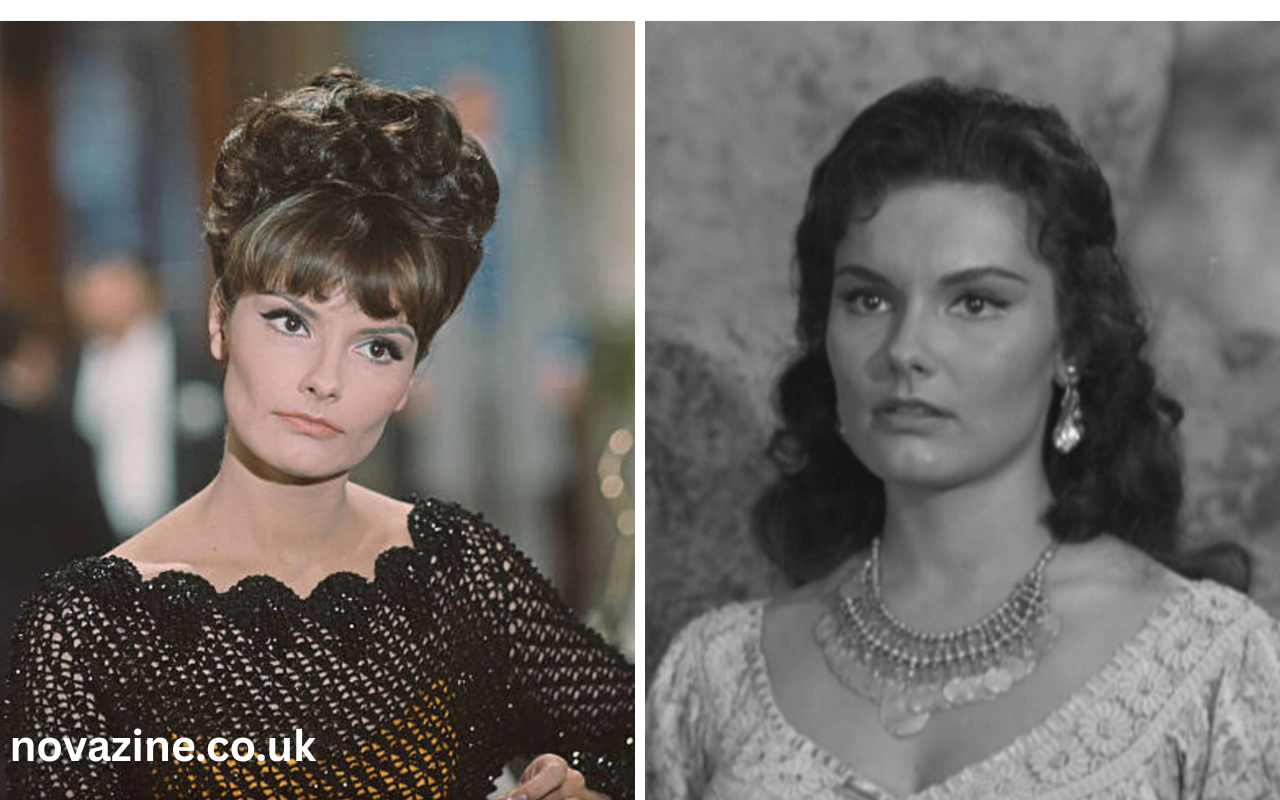
Before she ever touched a strip of deteriorating nitrate film, Suzanne Lloyd was determined to make her own name in the entertainment industry. She was not content to simply be known as Harold Lloyd’s granddaughter. She wanted to earn her place in front of the camera on her own terms. After attending Pasadena Junior College, she stepped into the world of television during the late 1950s, a time when the medium was exploding in popularity. Her natural poise, good looks, and undeniable screen presence quickly landed her guest roles on some of the biggest shows of the era, proving that she had inherited at least some of her grandfather’s natural charisma.
The list of classic television shows that feature Suzanne Lloyd in their credits reads like a tour of late 1950s and early 1960s Americana. She appeared twice on the iconic Western Gunsmoke, once in 1959 and again in 1961, holding her own against the legendary James Arness. She guest-starred on Bat Masterson, Lawman, and Laramie, becoming a familiar face to fans of the Western genre. She also stepped into the world of supernatural suspense with a role on One Step Beyond and appeared on the legal drama Perry Mason. Perhaps most notably for fans of science fiction and horror, she played Maya or Miss Thomas in the 1959 episode of The Twilight Zone titled Perchance to Dream, adding her talents to one of the most celebrated anthology series in television history.
Lloyd also proved her versatility by crossing the Atlantic to appear in several British productions. She made six appearances on The Saint, the classic adventure series starring Roger Moore, taking on different roles that showcased her range as an actress. She also appeared on The Avengers, another iconic British series that blended spy fiction with surreal style. These international credits gave her career a sophistication that many American television actresses of the period lacked. In addition to her television work, she appeared in feature films such as Pepe in 1960, Seven Ways from Sundown also in 1960, and The Return of Mr. Moto in 1965. She even shared the screen with the famous British comedy duo Morecambe and Wise in That Riviera Touch from 1966.
The Beloved Role on Zorro and Film Highlights
For many fans who remember classic Disney television, Suzanne Lloyd is best known for her recurring role as Raquel Toledano on the hit series Zorro, which aired from 1957 to 1959. The show starred Guy Williams as the masked hero fighting injustice in old California, and Lloyd’s character brought both romance and dramatic tension to the storyline. She appeared in seven episodes as Raquel, a woman caught in the complicated social dynamics of the era. Her performance was praised for bringing a quiet strength and dignity to the role, making Raquel more than just a typical damsel in distress. She also appeared as Isabella Linares in the final episode of the series, giving Zorro fans two memorable characters to enjoy from one talented actress.
While Zorro remains her most beloved television credit, Lloyd continued to work steadily throughout the 1960s, taking on roles that allowed her to explore different genres and styles. She appeared in the musical comedy Pepe, a film packed with celebrity cameos that demonstrated the interconnected nature of Hollywood at the time. She also starred in the Western Seven Ways from Sundown, returning to the genre that had provided so many of her early television opportunities. In 1965, she played Maxine Powell in The Return of Mr. Moto, stepping into the world of espionage and detective thrillers that were immensely popular during the Cold War era.
The late 1960s saw Lloyd take on roles in European and international productions that added a cosmopolitan flavor to her filmography. She appeared in The Champagne Murders in 1967, a mystery film that showcased her ability to handle suspense and intrigue. While she never achieved the level of superstardom that her grandfather had enjoyed in the silent era, she built a respectable and steady career that lasted for over a decade. More importantly, her time in front of the camera gave her a deep appreciation for the craft of filmmaking and the challenges of preserving performance for posterity. These experiences would prove invaluable when she later took on the monumental task of preserving Harold Lloyd’s films for future generations.
Marriage, Motherhood, and Life Behind the Scenes
While Suzanne Lloyd was building her on‑screen career, she was also building a family. She married Allan A. Buckhantz, a television producer and director, in 1953, a union that connected her to the production side of the entertainment industry. Although this marriage eventually ended in divorce, it gave her valuable insight into how television shows were made, from the initial concept to the final edit. This understanding of the production process would serve her well when she later had to negotiate with studios and distributors about how her grandfather’s films should be presented and licensed.
Lloyd later found lasting love with Buddy Bregman, a highly respected record producer and composer who had worked with some of the biggest names in music, including Ella Fitzgerald, Bing Crosby, and Frank Sinatra. The couple married in 1961 and remained together for nearly three decades, divorcing only in 1988. This marriage was significant not only for its longevity but also for the family it created. Suzanne and Buddy had a daughter, Tracey E. Bregman, who would go on to become an Emmy Award‑winning actress in her own right. Tracey is best known for her long‑running role as Lauren Fenmore on the daytime soap opera The Young and the Restless, a character she has played for over three decades.
Watching her daughter achieve success in the same competitive industry where she had worked must have been a source of immense pride for Suzanne. It also gave her a unique generational perspective on Hollywood. She had grown up surrounded by the giants of silent cinema, worked alongside the stars of classic television, and watched her daughter thrive in the modern era of daytime television. This three‑generation view of show business taught her that fame was fleeting but that the physical artifacts of filmmaking could last forever if properly cared for. She learned early on that studios often treated negatives, photographs, and costumes as disposable goods. That knowledge would become the foundation of her life’s work after her grandfather’s death.
The Heavy Burden of Inheriting a Film Library
The death of Harold Lloyd in 1971 was a devastating emotional blow for Suzanne, but it also placed a heavy legal and financial burden on her young shoulders. At just nineteen years old, still a college student more focused on exams than on business contracts, she was named one of three trustees of her grandfather’s film library. This was an extraordinary show of confidence from the legendary comedian, who had recognized in his granddaughter a sharp mind and a trustworthy heart. His will specifically stated that she would be the family representative working on all matters related to his films, his image, and his legacy. For a teenager, this responsibility was overwhelming, but Suzanne accepted it as a sacred duty.
Growing up, Suzanne had helped her grandfather with small tasks related to his collection without realizing how important those chores would become. Her first summer job was to air out nitrate films and relabel the storage cans, a humble beginning that taught her the basics of film handling and preservation. She had sat with him for hours as he lectured college students and answered questions from admirers. These informal experiences were more valuable than any formal education could have been. They gave her an intimate understanding of her grandfather’s artistic standards and his specific wishes for how his comedies should be presented, which included a strong insistence that they never be interrupted by commercial breaks.
Unfortunately, the other trustees did not always share Harold Lloyd’s vision. During the 1970s and 1980s, the trust licensed edited versions of the films to companies like Time Life and Thames Television, deals that directly violated Harold’s wishes by chopping up his carefully timed comedies for television broadcast. Suzanne was outvoted on these decisions, but she never forgot her grandfather’s standards. She waited, learned the intricacies of contract law and film licensing, and bided her time. She knew that the trust structure could eventually be challenged and that her day would come. That day arrived in the 1990s when she petitioned the court to restructure the trust and fought successfully to become the sole trustee.
The Long Legal Battle for Sole Control
The fight to gain full control of the Harold Lloyd film library was not a simple matter of inheritance; it was a grueling legal and financial battle that stretched across several years. During the 1990s, Suzanne Lloyd worked with attorneys to challenge the existing trust arrangement, arguing that the other trustees had failed to honor her grandfather’s specific instructions regarding the presentation and preservation of his films. The court proceedings were complex, expensive, and emotionally draining. There were moments when she wondered if the fight was worth the toll it was taking on her personal life and her finances. But she persisted, driven by a sense of loyalty to the man who had raised her and to the art form he had helped to pioneer.
Finally, in 2001, the court ruled in her favor, and the entire library of eighty‑five surviving titles came back under her exclusive control. She immediately created Harold Lloyd Entertainment, Incorporated, a company designed to license the films exactly as her grandfather would have wished. This was the beginning of a new era for Harold Lloyd’s comedies, one defined by respect for the original artistic vision rather than by corporate expediency. No longer would the films be chopped up for commercial breaks or accompanied by tacky piano scores that Harold despised. Suzanne now had the power to ensure that every screening, every DVD release, and every television broadcast met the highest possible standards of quality and authenticity.
The library that Suzanne now controlled was massive, one of the largest privately held film libraries devoted to a single performer. It included approximately seventy Glass Character one-reelers from the late nineteen teens, nine two-reelers, four three-reelers, one four-reeler, ten silent features, seven sound feature films, four compilation films, and over fifty reels of home movies. There were also more than four thousand production stills, which she would later display in gallery showings in London and Los Angeles. However, owning the films was only the first step. Many of these films, some over eighty years old, were in desperate need of professional restoration. The original nitrate negatives were deteriorating, and the costs of digital scanning and repair were astronomical. Suzanne needed partners who understood the value of what she was protecting.
The Meticulous Restoration of Silent Classics
Read More : George P. Putnam The Master Promoter, Arctic Explorer, and Forgotten Architect of American Heroism
With control of the library finally secured, Suzanne Lloyd turned her attention to the monumental task of restoration. She approached more than fifteen studios and DVD producers, seeking partners who would help her fund the digital scanning and repair of the films. The response she received was frustratingly uniform: most companies wanted to cherry‑pick a few popular titles for quick profit, and none were willing to pay for the proper restorations and full orchestral scores that the movies needed. Undeterred, Suzanne turned to the UCLA Film and Television Archives and the Packard Humanities Foundation for assistance. These institutions understood the cultural importance of Harold Lloyd’s work and were willing to invest the time and money required to do the job correctly.
The restoration process was painstaking and slow. The original nitrate negatives were scanned at high resolution, a process that required specialized equipment and trained technicians. Each frame of film was examined for damage, including scratches, tears, and chemical deterioration. Digital tools were used to repair imperfections, frame by frame, in a process that could take hundreds of hours for a single feature film. New orchestral scores were composed to replace the cheap piano tracks that had been added for television broadcasts in the 1970s. Suzanne insisted that these scores be played by real orchestras and recorded in proper studios, honoring her grandfather’s original theatrical experience. The total cost of these restorations ran into the millions of dollars, but Suzanne considered every penny well spent.
The results of her labor have been spectacular. In 2002, Turner Classic Movies stepped forward and licensed the newly remastered films, reintroducing the comedy of Harold Lloyd to American audiences after years of relative obscurity. Sony Pictures Releasing premiered newly restored prints at the Film Forum in New York in April 2005, marking the first time in over fifty years that Harold Lloyd’s films played theatrically across the country. Landmark releases like The Freshman, Speedy, and Safety Last were scanned at two‑kilobyte or even four‑kilobyte resolution for stunning Blu‑ray releases by the Criterion Collection. Suzanne proudly notes that the Criterion discs look beautiful after receiving full digital restorations, often using master positives she had created from the original negatives as far back as 1974.
Bringing Harold Lloyd to Modern Audiences
Suzanne Lloyd has never been content to simply store her grandfather’s films in a climate‑controlled vault. She has dedicated her life to ensuring that Harold Lloyd’s comedies are seen the way they were always meant to be seen: on the big screen, with live audiences, and with full orchestral accompaniment. Her thirty‑year effort to restore and re‑release her grandfather’s films has been recognized as one of the most significant preservation projects in cinematic history. She has appeared in person to introduce screenings of Speedy and other classics at prestigious venues like the Film Forum in New York, connecting modern audiences directly to the living history of silent cinema. When she watches families laugh at the guy in the glasses, as she calls him, she knows that Harold is pleased.
Beyond traditional theatrical and home video releases, Suzanne has also embraced new opportunities to bring Harold Lloyd to younger generations. In partnership with Cinesite Studios, she has announced a collaboration to adapt Harold Lloyd’s films into a series of animated features. Dave Rosenbaum, Cinesite’s Chief Creative Officer, and Eamonn Butler, Executive Animation Director, are working with Suzanne to translate her grandfather’s comedic genius into a format that modern children can enjoy. As Suzanne herself has often said, we need laughter now more than ever. By allowing these classic comedies to be reimagined for contemporary audiences, she is ensuring that the universal language of physical comedy continues to be spoken for decades to come.
Suzanne has also co‑written the definitive book on her grandfather, Harold Lloyd: Master Comedian, featuring a foreword by the late Jack Lemmon. This volume serves as a permanent written record of his life and artistry, combining biographical information with rare photographs and detailed analyses of his most famous films. She has also published the fascinating 3‑D Hollywood and Harold Lloyd’s Hollywood Nudes in 3D, which showcases the pioneering three‑dimensional photography that her grandfather experimented with during the 1920s. These publications have helped broaden the public’s understanding of Harold Lloyd as not just a performer, but as a technical innovator who was decades ahead of his time.
A Legacy Secured for Future Generations
Today, thanks almost entirely to the relentless efforts of Suzanne Lloyd, Harold Lloyd is finally being recognized as the third genius of silent comedy, standing on equal footing with Charlie Chaplin and Buster Keaton. For decades, he was the forgotten man of that era, partly because he had retained control of his films while other comedians sold their rights away, and partly because his style of comedy did not fit the nostalgic mold that critics preferred. But Suzanne changed that by pushing for theatrical re‑releases, high‑quality home video editions, and international distribution. She has served on the Board of Trustees of the American Film Institute for over twenty years, a testament to her standing and influence within the film preservation community.
The commercial possibilities for branding and merchandising the iconic image of Harold Lloyd in his horn‑rimmed glasses are, in the words of one licensing expert, virtually endless. Yet Suzanne has approached these opportunities with caution, always seeking to balance commercial success with artistic dignity. She learned from her grandfather that an image is only valuable if it remains authentic. Every licensing deal, every screening event, and every public appearance is carefully planned to enhance, rather than diminish, the legacy of the man who made the world laugh. She has rejected offers that would have brought in quick cash but cheapened the brand, and she has accepted only those partnerships that align with her grandfather’s values.
Suzanne Lloyd started her career as an actress on Gunsmoke, The Twilight Zone, and Zorro, appearing in more than forty television episodes and a dozen feature films. She could have easily rested on those credits and led a quiet life. Instead, she chose to fight a thirty‑year legal and financial battle to preserve the work of the man who raised her. She poured her own money into restorations, worked with archives and foundations to secure matching funds, and personally oversaw every detail of the film scanning and scoring process. The Harold Lloyd library is now preserved for generations to come, a jewel of silent cinema that will never fade away. And that is the legacy of Suzanne Lloyd, the granddaughter who refused to let a genius be forgotten.