The Emergence of a New Kind of Hollywood Star
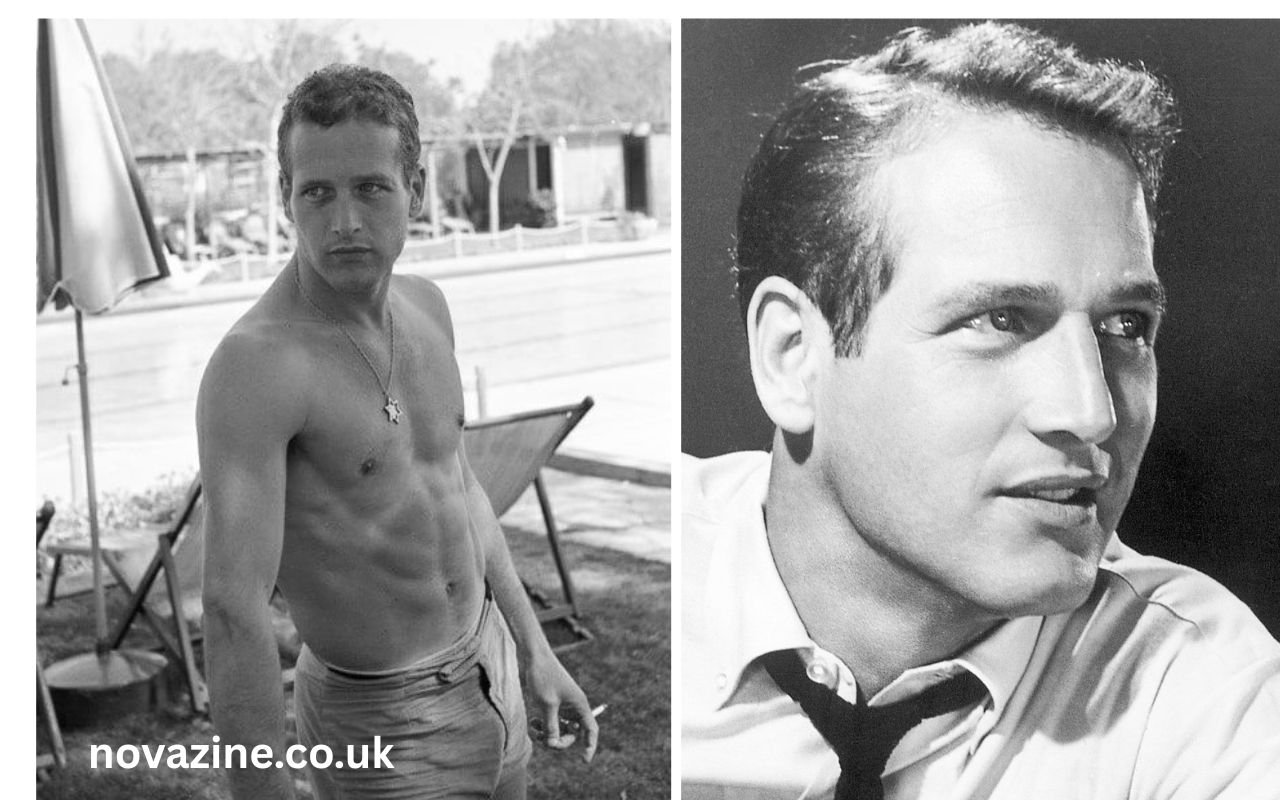
The 1960s marked the decade in which Paul Newman transformed from a promising young actor into a genuine Hollywood icon and cultural force. After a rocky start with his debut film The Silver Chalice in 1954, which Newman so despised that he famously took out a newspaper advertisement apologizing for his performance, he steadily built his reputation paul newman 1960s throughout the late 1950s . His true breakthrough came with Cat on a Hot Tin Roof in 1958, opposite Elizabeth Taylor, which earned him his first Academy Award nomination for Best Actor and established him as a leading man of considerable range and intensity . This performance opened the door to a decade of challenging, iconoclastic roles that would come to define his career and influence generations of actors who followed.
What set Newman apart from his contemporaries during the 1960s was his embodiment of a new kind of screen hero, one who was flawed, rebellious, and often morally ambiguous. Alongside actors like Marlon Brando and James Dean, Newman helped revolutionize American cinema by rejecting the squeaky clean archetypes of Hollywood’s Golden Age . His characters in films like The Hustler, Hud, and Cool Hand Luke were anti-heroes, men who operated outside the law or conventional morality yet somehow retained the audience’s sympathy and admiration. This approach resonated deeply with 1960s audiences, who were increasingly cynical about authority and traditional values amidst the turbulence of the Vietnam War era and civil rights movement.
The cultural impact of Newman’s 1960s persona cannot be overstated. Film critics have noted that his characters captured the essence of the postwar American man, cool, cynical, and confident even as the known world of traditional values crumbled around him . His piercing blue eyes, rugged good looks, and effortless charm made him a sex symbol, but it was his willingness to play unlikable characters that truly distinguished him. Whether portraying a scheming pool shark, an amoral Texas rancher, or a defiant chain gang prisoner, Newman brought a coiled intensity and quiet vulnerability that made his anti-heroes deeply compelling. By the end of the decade, he had become Hollywood’s most popular leading actor, a position cemented by the enormous success of Butch Cassidy and the Sundance Kid in 1969.
The Hustler: Redefining American Masculinity in 1961
The year 1961 brought Paul Newman one of his most iconic and career defining roles, that of Fast Eddie Felson in Robert Rossen’s The Hustler. This gritty black and white drama about a talented but deeply self destructive pool shark looking to beat the legendary player Minnesota Fats showcased Newman at his most intense, vulnerable, and raw . His performance as Eddie, a man whose burning ambition is matched only by his arrogance and profound insecurity, earned him his second Academy Award nomination for Best Actor. The film was a critical and commercial success, and it established a character archetype, the charming loser with a hidden well of pain, that Newman would return to throughout his career. The role was so definitive that he would reprise it twenty-five years later in Martin Scorsese’s The Color of Money, finally winning his only competitive Oscar for the performance after eight previous nominations.
The Hustler was significant not only for Newman’s remarkable performance but for its thematic resonance with American culture at the dawn of a turbulent new decade. The film’s dark, existential tone and its unflinching exploration of ambition, failure, addiction, and redemption reflected a growing disillusionment with postwar optimism that was spreading across the country. Eddie Felson is a man who wants to win at any cost, but his harrowing journey reveals the hollowness of that pursuit when disconnected from genuine human connection, love, and integrity. Newman’s portrayal captured this tension perfectly, making Eddie both admirable and deeply pitiable, a winner who is fundamentally a loser in the ways that truly matter. The film’s famous pool hall sequences, shot with documentary-style realism, showcased Newman’s dedication to his craft, as he trained extensively for months to make his pool playing look completely authentic.
The Hustler also cemented Newman’s partnership with a new generation of New York based actors and filmmakers who were actively reshaping Hollywood from the inside. Working within the Actors Studio tradition, Newman brought a naturalistic, Method-inflected intensity to the role that contrasted sharply with the more theatrical, polished style of old Hollywood . The film’s commercial success proved beyond doubt that American audiences were hungry for more complex, morally ambiguous characters, paving the way for the anti-heroes that would dominate cinema for the rest of the decade. Newman’s Eddie Felson became an essential touchstone for actors seeking to portray flawed masculinity with honesty and depth, and the film remains a landmark of 1960s American cinema, frequently cited by critics and directors as one of the greatest movies ever made.
Hud and Cool Hand Luke: The Definitive Anti-Hero Duo
By 1963, Paul Newman had fully embraced his status as Hollywood’s premier anti-hero with his controversial performance in Martin Ritt’s Hud. In this film, Newman played Hud Bannon, an amoral, arrogant, and utterly selfish Texas rancher’s son who embodies everything wrong with unchecked individualism and greed . Unlike his earlier anti-heroes like Fast Eddie, who possessed a core of decency beneath their flaws, Hud is genuinely unlikable, a man who cares only for his own pleasure and advancement, even at the expense of his own family. Remarkably, Newman’s performance was so charismatic and compelling that audiences adored the character anyway, completely missing what the filmmakers intended as a cautionary tale about moral rot and empty materialism . The film earned Newman another Academy Award nomination for Best Actor and solidified his unique ability to make audiences root for deeply flawed, even contemptible characters.
Four years later, Newman took his anti-hero persona to new heights with Stuart Rosenberg’s Cool Hand Luke, released in 1967. Set in a brutally oppressive Southern prison chain gang, the film stars Newman as Lucas Luke Jackson, a defiant prisoner who refuses to submit to any form of authority no matter how many times he is beaten down, humiliated, and tortured . Unlike Hud’s moral vacancy and selfishness, Luke’s rebellion is portrayed as genuinely heroic, a powerful testament to the indomitable human spirit in the face of crushing, inhuman systems. The film resonated powerfully with 1960s counterculture audiences, who saw in Luke a powerful symbol of resistance against the establishment, the Vietnam War, and all forms of authoritarian control. Newman’s performance, which earned him yet another Oscar nomination, is iconic, particularly the famous scene where Luke wins a bet by eating fifty hard boiled eggs, a sequence that inspired countless imitations at colleges and among soldiers serving in Vietnam.
Together, Hud and Cool Hand Luke bookend Newman’s exploration of American masculinity in the 1960s, moving from a sharp critique of selfishness to a powerful celebration of heroic rebellion. In both films, Newman plays an outsider who absolutely refuses to conform to societal expectations, but the moral valence of that refusal shifts dramatically between the two pictures. Hud is a chilling warning about what happens when individualism curdles into pure narcissism and sociopathy, while Luke is an inspiration, showing how defiance can be an act of profound grace and humanity. Both performances rely entirely on Newman’s unique ability to project vulnerability and rock solid toughness simultaneously, allowing audiences to see the humanity beneath the bravado in both characters. These films, along with The Hustler, form a perfect triptych of 1960s Newman performances that defined the decade’s cinematic landscape.
Butch Cassidy and the Sundance Kid: A Blockbuster Friendship
As the 1960s drew to a close, Paul Newman achieved his greatest commercial success with George Roy Hill’s Butch Cassidy and the Sundance Kid, co-starring Robert Redford and released in 1969. This revisionist Western comedy drama told the story of two charming, witty outlaws whose time has clearly passed, as they are hunted by an unstoppable posse across the American West . Newman played the roguish, fast talking Butch Cassidy, the ideas man of the duo, while Redford played the laconic, deadly Sundance Kid. The film was a massive hit, becoming the highest grossing Western in motion picture history up to that point and cementing Newman’s status as one of the biggest movie stars of his generation . The on screen chemistry between Newman and Redford was electric, and the two actors became lifelong friends, later reuniting for Hill’s The Sting in 1973.
Butch Cassidy and the Sundance Kid was a significant departure for Newman in several important ways. Unlike his earlier, darker anti-hero roles, this film was much lighter in tone, blending comedy, action, and romance with a self-aware, almost postmodern sensibility that felt fresh and exciting. Newman’s Butch is a lovable rogue, a criminal with a heart of gold who prefers talking his way out of trouble to using any kind of violence. The film’s famous final freeze-frame, showing Butch and Sundance charging into gunfire, became one of the most iconic images in cinema history . The film also showcased Newman’s comedic timing, a skill he had rarely been allowed to display in his more serious dramatic roles. The bicycle scene set to Raindrops Keep Fallin on My Head remains a beloved bit of cinematic whimsy, proving Newman’s surprising range as a comedic performer.
The film’s enormous success marked a turning point in Newman’s career, positioning him as a bankable star who could carry a major studio blockbuster while maintaining his hard won artistic credibility. Butch Cassidy and the Sundance Kid also helped launch Robert Redford’s career as a leading man, and the two actors would forever be linked in the public imagination. For Newman, who was forty-four years old when the film was released, it represented a new phase of his career, one in which he could confidently balance challenging dramatic roles with more commercially oriented projects. The film’s themes of obsolescence and mortality, two outlaws who know their way of life is ending and embrace it with humor and grace, resonated deeply with Newman, who would continue to evolve as an actor for another four decades.
A Productive String of 1960s Film Classics
Read More : Dominique Caine The Untold Story of Michael Caine’s Equestrian Daughter
Beyond his most famous roles, Paul Newman was extraordinarily prolific throughout the 1960s, appearing in a remarkable string of films that showcased his impressive versatility as an actor. Following The Hustler in 1961, Newman starred in Paris Blues opposite Sidney Poitier and his wife Joanne Woodward, a film about jazz musicians in Paris that highlighted his more romantic and sensitive side . In 1962, he took on the challenging role of Chance Wayne in Sweet Bird of Youth, a film adaptation of Tennessee Williams’ play about a faded Hollywood star and her young gigolo lover, earning him a Golden Globe nomination . He also appeared in Hemingway’s Adventures of a Young Man, playing a memorable supporting role as a washed up boxer, a performance that earned him another Golden Globe nomination for Best Supporting Actor.
Newman also ventured into thriller and suspense genres during the decade with considerable success. In 1966, he starred as the title character in Harper, a neo-noir detective film that introduced audiences to the cool, cynical private investigator Lew Harper, a role he would reprise in the 1975 sequel The Drowning Pool . Also in 1966, Newman worked with legendary director Alfred Hitchcock on Torn Curtain, playing an American scientist who pretends to defect to East Germany. Though the film is considered lesser Hitchcock by critics, Newman’s performance was praised, and it demonstrated his willingness to work with top tier directors outside his comfort zone . In 1967, he starred in the Western Hombre, playing a white man raised by Apaches who must use his survival skills to protect a group of stagecoach passengers, a role that further cemented his status as a rugged, capable hero.
The sheer breadth of Newman’s 1960s filmography is astonishing by modern standards. He made two films in 1963, the classic Hud and the comedy A New Kind of Love, plus the thriller The Prize with Edward G. Robinson . In 1964, he starred in the black comedy What a Way to Go with Shirley MacLaine and the Western The Outrage, a remake of Akira Kurosawa’s Rashomon . In 1965, he appeared in the period comedy Lady L with Peter Ustinov. This relentless work ethic, combined with his deep commitment to his craft, made Newman one of the most respected actors of his generation. Even when the films themselves were not all critical successes, Newman’s performances were consistently praised. Martin Scorsese, who would later direct Newman in The Color of Money, noted that by the end of the decade, Newman had honed his acting instrument to a level of refinement that very few actors ever achieve.
The Newman-Woodward Partnership: A Legendary Hollywood Romance
The 1960s were also defined for Paul Newman by his enduring and deeply admired partnership with actress Joanne Woodward. The two had first met in 1953 while working on the Broadway production of Picnic, but at the time, Newman was married to his first wife, Jacqueline Witte . After Newman divorced Witte in 1958, he and Woodward married in Las Vegas on January 29 of that same year . Over the course of the 1960s, the couple became Hollywood’s most admired pair, known for their mutual respect, their complete avoidance of the typical celebrity social scene, and their conscious decision to raise their family away from Hollywood, first in New York and later in Westport, Connecticut . Their marriage lasted until Newman’s death in 2008, a truly remarkable achievement in an industry where long term relationships are exceptionally rare.
The couple collaborated on numerous films throughout the decade, beginning with The Long, Hot Summer in 1958, for which Newman won the Best Actor award at the Cannes Film Festival . They appeared together in Rally Round the Flag, Boys in 1958, From the Terrace in 1960, Paris Blues in 1961, A New Kind of Love in 1963, and Winning in 1969 . Newman also directed Woodward in her most critically acclaimed performance, Rachel, Rachel in 1968, a deeply personal film about a repressed schoolteacher. Newman’s directorial debut earned him a Golden Globe for Best Director and an Academy Award nomination for Best Picture, while Woodward received an Oscar nomination for Best Actress . The film was a labor of love for both, and it demonstrated Newman’s considerable talent behind the camera as well as in front of it.
Woodward often sacrificed her own promising career to support Newman’s, but Newman was always quick to credit her as the stabilizing force in his life. He once said publicly that Joanne really gave up her career for me, to stick by me, to make the marriage work . In return, Newman used his considerable influence to create opportunities for Woodward, producing and directing projects that showcased her immense talent. Their partnership was not just romantic but also deeply creative and intellectual, with Woodward often serving as Newman’s most trusted reader and advisor on scripts. The couple’s decision to move their family to Westport, Connecticut, in the early 1960s was a conscious effort to escape the pressures of Hollywood and provide a normal upbringing for their three daughters . This move, Newman later said, allowed him to pursue his other passions, including racing and politics, without being consumed by the film industry.
Life Beyond Acting: Racing, Politics, and Activism
During the 1960s, Paul Newman became almost as famous for his off screen activities as he was for his iconic films. In 1969, while preparing for his role as a race car driver in the film Winning, Newman discovered a burning passion for auto racing that would become a lifelong obsession . Despite starting the sport at the relatively advanced age of forty-four, Newman proved to be a talented and dedicated driver, winning his first Sports Car Club of America national championship in 1972. He would go on to win four SCCA national championships and, at the remarkable age of seventy, became the oldest driver to win a professional race, taking first place at the 24 Hours of Daytona in 1995 . Newman would later become a successful car owner, forming Newman/Haas Racing in 1983, a team that won eight championships and over one hundred races.
Newman was also a passionate and outspoken political activist throughout the 1960s, using his considerable celebrity to advocate for progressive causes. He was a staunch supporter of the civil rights movement and participated in the historic 1963 March on Washington . He was an outspoken critic of the Vietnam War, and in 1968, he campaigned actively for anti war candidate Senator Eugene McCarthy, serving as a Connecticut delegate to the Democratic National Convention . The following year, he and Woodward joined an anti war demonstration in front of the American Embassy in London, putting their public reputations on the line to oppose the conflict. Newman’s political activism made him a target of the Nixon administration, and he was reportedly delighted when he learned in 1973 that he had been placed at number nineteen on President Richard Nixon’s infamous enemies list.
Newman’s commitment to his principles extended to charitable work that would eventually become his greatest legacy. In the 1960s, he began quietly donating his film earnings to various causes, seeking no publicity for his generosity. But it was in 1982 that he would launch Newman’s Own, a food company that donates all of its after tax profits to charity. The company started with a homemade salad dressing that Newman had been mixing for years, using simple ingredients like olive oil, mustard, red wine vinegar, garlic, and onions. By the time of his death, Newman’s Own had raised over two hundred million dollars, primarily for the Hole in the Wall Gang camps, which Newman founded to serve chronically and terminally ill children. The name of the camps was taken from his film Butch Cassidy and the Sundance Kid, a fitting tribute to a man who always made time for others despite his immense fame.
The Lasting Legacy of Paul Newman’s 1960s Work
The legacy of Paul Newman’s 1960s film work continues to influence actors, directors, and audiences more than half a century later. His portrayal of anti-heroes in The Hustler, Hud, and Cool Hand Luke established a new template for American screen masculinity, one that acknowledged weakness and vulnerability alongside strength and defiance. Every actor who has played a charming but morally compromised character owes a debt to Newman’s work in this decade. His decision to play genuinely unlikable characters like Hud Bannon, risking audience alienation for the sake of artistic truth, set a standard for integrity that inspired subsequent generations of actors. Martin Scorsese, Paul Thomas Anderson, and the Coen Brothers have all cited Newman’s 1960s performances as essential influences on their own work.
Newman’s partnership with Joanne Woodward also left an enduring mark on Hollywood, proving that a successful marriage could survive, even thrive, alongside two demanding acting careers. Their decision to prioritize family over the social whirl of Hollywood parties and premieres was unusual for its time, but it set an example that many later celebrity couples have tried, with varying success, to emulate. The couple’s collaborative work, particularly Newman’s direction of Woodward in Rachel, Rachel, demonstrated that a husband and wife could work together creatively without damaging their personal relationship. In an industry notorious for short term marriages and bitter divorces, the Newman-Woodward partnership remains a beacon of what is possible when mutual respect and genuine partnership take precedence over ego.
Finally, Newman’s 1960s activism laid the groundwork for a lifetime of political engagement and charitable giving that would become as much a part of his public identity as his film roles. He proved that a major Hollywood star could speak out on controversial political issues without destroying his career, a lesson that later actors would heed. His decision to march for civil rights, to oppose the Vietnam War, and to campaign for progressive candidates cost him some fans, but it earned him the lasting respect of those who valued his courage. The millions of dollars raised by Newman’s Own and distributed to children’s charities around the world represent the most tangible legacy of a man who never forgot that his good fortune came with an obligation to give back. Paul Newman entered the 1960s as a promising young actor and left it as a Hollywood legend, a devoted husband and father, and a committed citizen of the world.